Ultimate Guide to Major Project Reports for BCA, MCA, BTech CSE
Unlock the secrets to writing impactful major project reports for BCA, MCA, and BTech CSE. Discover tips to stand out and impress your evaluators!
Importance of Major Project Reports in BCA, MCA, and BTech CSE
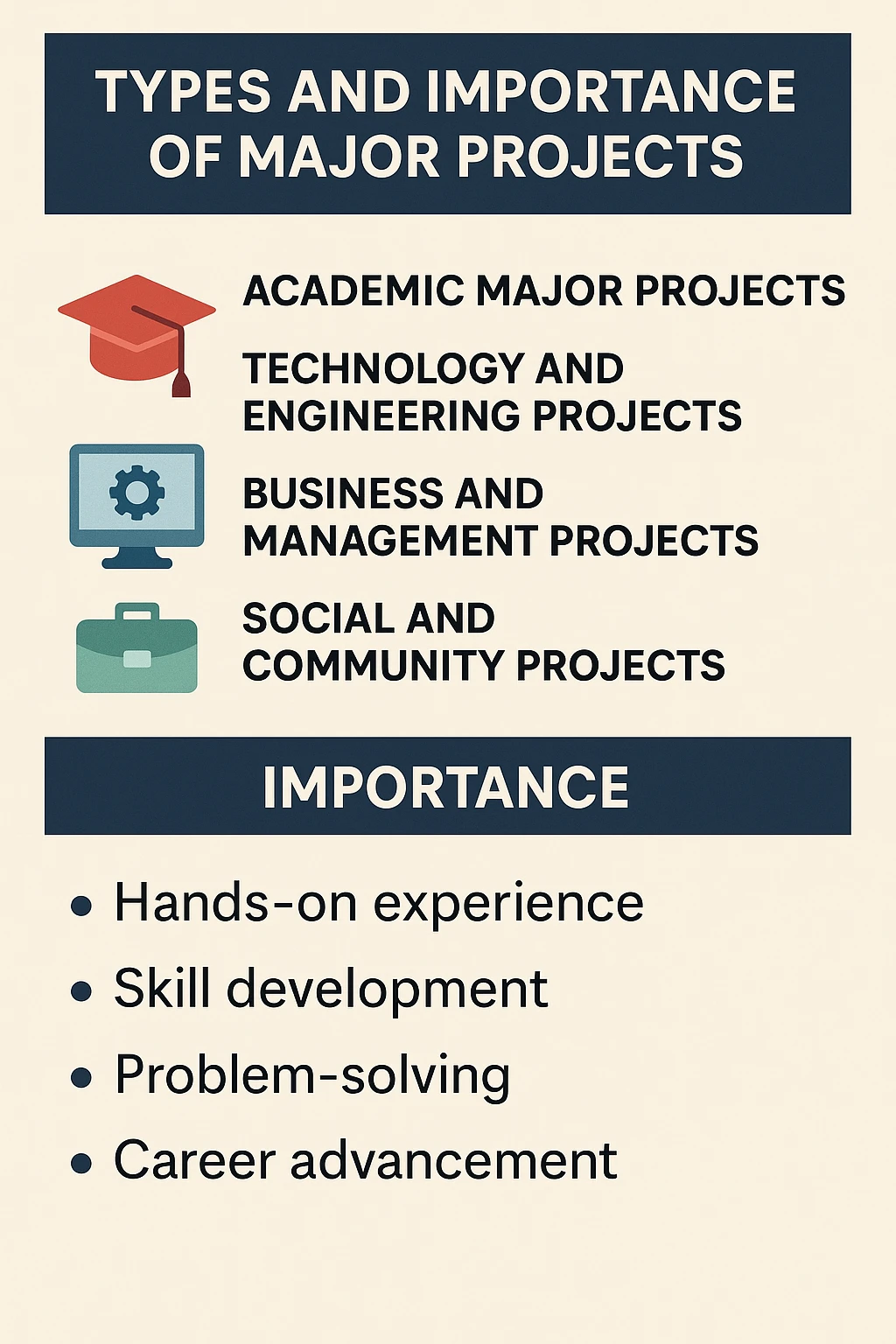
Major project reports are critical components of academic curricula in BCA, MCA, and BTech CSE programs. These reports not only serve as a culmination of the technical skills and knowledge acquired during the course of study but also reflect a student's ability to apply theoretical concepts to practical problems. By working on a major project, students gain hands-on experience in solving real-world issues, which is invaluable in their professional development. Consequently, the quality of the project report can significantly influence a student's final grade and future career prospects.
Moreover, major project reports act as a demonstration of a student's ability to conduct independent research, analyze data, and present findings in a coherent and professional manner. This is particularly important for students aiming to pursue higher studies or research-oriented careers, as a well-documented project report showcases their research capabilities. Additionally, employers often look for candidates who have successfully completed substantial projects, as it indicates a candidate's problem-solving skills, technical proficiency, and ability to work under pressure.
Furthermore, the process of writing a major project report helps students develop essential soft skills such as time management, communication, and teamwork. Working on a project typically involves collaboration with peers, mentors, and industry experts, which enhances a student's ability to work in a team and communicate effectively. These skills are highly valued in the professional world, making the experience of writing a major project report a crucial stepping stone in a student's career.
Key Components of a Major Project Report
A comprehensive major project report consists of several key components, each serving a specific purpose. The first component is the abstract, which provides a concise summary of the project, including the objectives, methodology, results, and conclusions. The abstract is typically around 150-200 words and offers readers a quick overview of the entire report.
The introduction section follows the abstract and sets the stage for the project. It includes background information, the problem statement, and the objectives of the project. This section should clearly articulate the significance of the project and the rationale behind choosing the specific problem. It is essential to provide a well-defined problem statement as it guides the direction of the entire project.
The literature review is another crucial component that involves a detailed examination of existing research and studies related to the project topic. This section helps to identify gaps in the current knowledge and provides a foundation for the proposed research. It is important to critically analyze and synthesize the relevant literature to demonstrate a thorough understanding of the subject matter.
Steps to Prepare an Effective Major Project Report
Preparing an effective major project report involves several well-defined steps. The first step is to choose a relevant and feasible project topic. It is essential to select a topic that aligns with your interests, skill set, and the current trends in the field. Once the topic is finalized, the next step is to conduct a thorough literature review to understand the existing research and identify gaps that your project can address.
After the literature review, the next step is to develop a detailed project plan. This includes defining the project objectives, scope, methodology, and timeline. A well-structured project plan serves as a roadmap for the entire project and helps in staying organized and focused. It is also important to discuss the project plan with your mentor or supervisor to get their feedback and approval.
The next step is to execute the project according to the plan. This involves data collection, analysis, and implementation of the proposed solution. It is crucial to document every step of the process meticulously, as this information will be used in the report. Once the project is completed, the final step is to write the report, ensuring that it includes all the key components and follows the required format and structure.
Common Challenges in Writing Major Project Reports
Conducting thorough research and collecting relevant data are critical for the success of a major project. One of the most important tips for effective research is to start early. Research can be time-consuming, and starting early ensures that you have sufficient time to explore various sources and gather comprehensive information. It is also important to use a combination of primary and secondary sources to get a well-rounded perspective on the topic.
When it comes to data collection, it is essential to use reliable and credible sources. For primary data collection, ensure that you follow ethical guidelines and obtain the necessary permissions. Surveys, interviews, and experiments are common methods for primary data collection. For secondary data, use reputable sources such as academic journals, books, and official reports. It is also important to critically evaluate the sources to ensure their validity and reliability.
Organizing and managing the collected data is another crucial aspect of research. Use tools such as spreadsheets, databases, or specialized software to store and manage the data. Proper organization of data helps in easy retrieval and analysis. Additionally, document the sources of data accurately to ensure proper citation and avoid any issues related to plagiarism.
Formatting and Structuring Your Project Report
Proper formatting and structuring are essential for creating a professional and coherent project report. The first step is to follow the guidelines provided by your institution or department. These guidelines typically include details on the font type and size, margins, spacing, and citation style. Adhering to these guidelines ensures that your report meets the required standards.
The structure of the report should be logical and easy to follow. Start with the title page, which includes the title of the project, your name, the name of your institution, and the date of submission. The next section is the abstract, followed by the table of contents. The main body of the report typically includes the introduction, literature review, methodology, results, discussion, conclusion, and references.
Each section should be clearly labeled and organized in a logical sequence. Use headings and subheadings to break down the content and make it easy for readers to navigate through the report. Additionally, use figures, tables, and charts to present data and findings in a visually appealing and easy-to-understand manner. Ensure that all figures and tables are properly labeled and referenced in the text.
Tools and Software for Project Report Writing
There are several tools and software available that can help in writing and formatting a major project report. One of the most commonly used tools is Microsoft Word, which offers a range of features for document creation and formatting. It includes templates, styles, and formatting options that can help in creating a professional-looking report. Additionally, Word's referencing and citation tools make it easy to manage references and create a bibliography.
Another useful tool is LaTeX, a typesetting system that is widely used for creating technical and scientific documents. LaTeX is particularly useful for projects that involve complex equations, tables, and figures. It offers a high level of precision and control over the formatting and layout of the document. However, it requires some learning and familiarity with its syntax and commands.
For data analysis and visualization, tools such as Excel, SPSS, R, and Python are widely used. These tools offer a range of features for data manipulation, analysis, and visualization. Excel is particularly useful for managing and analyzing data, while SPSS is commonly used for statistical analysis. R and Python are powerful programming languages that offer extensive libraries and packages for data analysis and visualization.
Examples of Successful Major Project Reports
Examining examples of successful major project reports can provide valuable insights and inspiration for your own project. One example is a project on "Predictive Analytics for Healthcare Management," which involved developing a predictive model to identify patients at high risk of readmission. The report included a thorough literature review, a detailed explanation of the methodology, and a comprehensive analysis of the results. The use of advanced data analysis techniques and clear presentation of findings made this project stand out.
Another example is a project on "Blockchain Technology for Supply Chain Management." This project explored the potential of blockchain technology to enhance transparency and efficiency in supply chain operations. The report included a detailed analysis of the existing supply chain challenges, a comprehensive review of blockchain technology, and a proposed solution. The use of real-world case studies and practical examples added value to the project.
A third example is a project on "Machine Learning for Sentiment Analysis." This project involved developing a machine learning model to analyze sentiment in social media posts. The report included a detailed explanation of the machine learning algorithms used, a comprehensive analysis of the results, and a discussion of the potential applications of the model. The use of real-world data and the practical implications of the findings made this project successful.
Conclusion and Final Thoughts on Project Reporting
In conclusion, writing a major project report is a challenging but rewarding task that plays a crucial role in a student's academic and professional development. It requires careful planning, thorough research, and meticulous documentation. By following the steps outlined in this guide and addressing common challenges, students can create impactful and professional project reports that stand out and impress evaluators.
It is important to remember that the quality of the project report reflects your technical skills, research capabilities, and ability to communicate effectively. Therefore, invest sufficient time and effort in each stage of the project, from choosing a relevant topic to writing and formatting the report. Seek feedback from your mentors and peers, and be open to constructive criticism to improve the quality of your report.
Ultimately, a well-written major project report can open doors to numerous opportunities, including higher studies, research positions, and job offers. It serves as a testament to your hard work, dedication, and technical proficiency. Embrace the challenge, stay focused, and put your best foot forward to create a project report that you can be proud of.
Major Project Preparation by Webiscribe
Preparing a major project can be overwhelming, especially when balancing exams and placement preparations. Webiscribe specializes in assisting students through this rigorous process by providing structured guidance on technical writing and documentation. From selecting a high-impact topic to refining your literature review and ensuring your report meets university formatting standards, Webiscribe acts as a bridge between your technical implementation and a professional presentation. Their expertise helps students articulate complex technical architectures into clear, academic prose, ensuring that the hard work put into coding is reflected accurately in the final submission.
Frequently Asked Questions (FAQ)
1. What is the ideal length for a major project report?
While institutional requirements vary, a standard major project report for BTech or MCA typically ranges between 60 to 100 pages. This includes all technical diagrams, code snippets, and data analysis. BCA reports are often slightly shorter, ranging from 40 to 60 pages.
2. How do I choose a "trending" project topic?
Focus on current industry demands such as Artificial Intelligence (AI), Machine Learning, Cyber Security, Blockchain, or Cloud Computing. Ensure the topic is feasible within your timeframe and that you have access to the necessary data or hardware.
3. Is it mandatory to include the source code in the report?
Usually, you do not include the entire source code. Instead, you should include "Core Code Snippets" or critical algorithms that demonstrate your logic. The full code is typically submitted separately in a digital format or included in an appendix if specifically requested.
4. What is the difference between a 'Synopsis' and a 'Report'?
A Synopsis is a short proposal (3–5 pages) submitted before starting the project to get approval. The Report is the final, comprehensive document detailing the completed work, results, and conclusions.
5. How can I avoid plagiarism in my project report?
Always paraphrase information gathered from research papers and cite your sources using standard formats like APA or IEEE. Use tools like Turnitin or Grammarly to check your content before final submission.